Friday, April 27, 2012

PostMan's Law of Junk Paper

It will accumulate by itself.


Corollary to PostMan's Law of Junk Paper
You will be shredding the paper yourself after sometime.

Saturday, April 21, 2012

Friday, April 20, 2012

PostMan's Law of New Password

In first couple of days, you will have hard time recalling the newly changed password.

Thursday, April 19, 2012

Colour Blind

I: (to my 5 year old daughter) hey wow! Your mother placed a new fruit soap. Orange!
She: Its Peach.
I: How can you tell?
She: Orange is dark. Peach is light.
I: uh huh.


Men just can't get it.

Thursday, April 12, 2012

PostMan's Law of Dupattas

A Pakistani woman will have a stock of dupattas - new and of those belonging to discarded clothes.


- Dupatta - Wikipedia

Friday, April 06, 2012

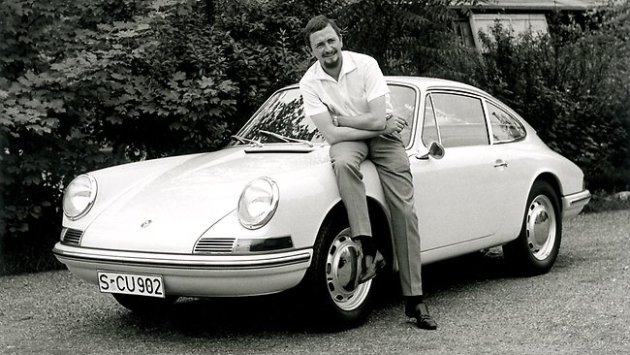
Designer of Porsche 911 Dies

How can I not mention about the car that has attained iconic status in the history of automobiles? My salute to you sir. This car, somehow, commands the respect that you perhaps might not have fathomed but your dedication to the design and stability resulted in it being so. There is not a single person on earth, who if collects automobile pictures, does not have a picture of Porsche 911 - apart from the wish of actually owning one.


Regards
-PostMan-
______


Courtesy Yahoo!


For a rich kid kicked out of design school, Ferdinand Alexander Porsche created one of the greatest legacies in automotive design with the Porsche 911 — one that will survive far beyond Porsche's death today at the age of 76.
The son of company founder Ferry Porsche, F.A. or "Butzi" as he was known spent most of his career at his eponymous firm Porsche Design, where he oversaw the styling of thousands of products from watches to yachts, many with the tag "Designed by F.A. Porsche."
But it's the 911's emergence in 1964, when Butzi Porsche was just 25 years old, that made him a historic figure. While his father and grandfather had been famous German engineers — the original Ferdinand Porsche engineered the first Volkswagen Beetle — F.A. Porsche chose to study design. A year after enrolling in a prestigious school, Porsche was in his own words "kicked out," and took at job at his father's fledging car business in 1957.
At the time, Ferry Porsche had created the successful Porsche 356, but needed a follow-up model. He set the car's basic layout —a rear engine, a short wheelbase for agile handing — but pushed the designers and engineers to fashion a more sporting look than the men who built the Beetle had produced so far.
Prowling the auto shows of Europe, F.A. Porsche formed an idea of how the car should look as a smooth, curving fastback, rejecting the flat angles popular in American cars of the era. "I just think you start creating edges when the body of a car is bad…they are lines that support something that ties the designer down," Porsche would say years later.
The new car's design spurred a dispute with the older designers in Ferry Porsche's shop, to such a degree Ferry went around them, taking his son's blueprints to the body fabricator. The first production-ready model, called the 901, appeared at the Frankfurt Auto Show in September 1964, and after Peugeot objected to the name, Porsche changed it to 911. Despite the timelessness of the 911's shape, F.A. Porsche believed his greatest design came a few years later, with the Porsche 904 race car.
When the company went public in 1971, the Porsche family withdrew from management roles — although F.A. Porsche would remain a presence on the company's board and in its design studios. "He established a design culture in our company that has shaped our sports cars to this very day," said Matthias Müller, President and Chief Executive Officer of Porsche AG. "His philosophy of good design is a legacy to us that we will honor for all time."

Friday, March 30, 2012

PostMan's Law of MS Excel

- There will be a typo.
- You will play with borders and colours in the spreadsheet that you often work with.

Thursday, March 22, 2012

PostMan's Law of Multiple Cars

Buying a new car in addition to the presence of the older one will result in lesser attention being paid to the older car.

Thursday, March 15, 2012

BCP or DR?

My wife keeps a diaper and wet tissues in the glove box of our car for our 1 year old. Does that fall under Business Continuity Planning (BCP) or Disaster Recovery(DR)?

Wednesday, March 14, 2012

PostMan's Law of Child Care

The level of attention to the care and protection given to children decreases as the number of children increases.

Friday, March 09, 2012

Aman Tehreek.

Count me as your new member - wherever you are.


Written by Nadeem F Paracha in Dawn


-----------
In March 2010 animated conspiracy theorist, TV personality and poster-boy for stylised sofa-warming-jihad, Zaid Hamid finally met his nemesis at the Peshawar University.
Hamid, who till then, had been enjoying a virtual free run on certain TV channels and on privately-owned campuses, was chased away by large sections of the audience that turned up to listen to him speak at the state-owned Peshawar University.
As Hamid’s speech began being booed at, Hamid made a quick exit from the premises only to face another crowd of students outside who shouted slogans against him, and pelted his car with stones.
Suddenly a man who was lovingly being courted by TV channels and student bodies and administration of private educational institutions, was angrily courted out by the students of a state-owned university.
They accused the university administration for allowing a ‘fitna’ (provocateur) and ‘agent of military establishment’ to speak at the university.
Initial inquiry suggested that the main ‘perpetrators’ behind the incident were members of PkSF (the student-wing of the Awami National Party) and the PSF (the student-wing of the Pakistan Peoples Party). What’s more, the protest against Hamid was also joined by the right-wing IJT (the student-wing of the Jamat Islami).
It is interesting to note that IJT that is a traditional and ideological foe of organisations like PkSF and PSF was also present in giving Hamid a hostile send-away.
Further investigations into the matter revealed the narrative that had driven the students to confront Hamid. The narrative (that we will discuss later in the piece) was constructed by a little known organisation called the Aman Tehreek (Peace Movement).
The truth was it was not exactly a small outfit, but an umbrella organisation under which a number of mainstream progressive parties, student organisations and members of the civil society had gathered to protest not only against extremist outfits such as al Qaeda and the Taliban, but also against the way the Pakistani military establishment and media had been engaging with these organisations.
But since the Tehreek’s narratives on religious extremism, terrorism, the military-establishment and the American drone attacks were largely anti-theistic to the ones toed by the largely right-wing mainstream electronic media, its activities were never given much space.
Recently the Tehreek came into focus again when its members vehemently protested in the streets of Peshawar against the Difa-e-Pakistan Council – an umbrella organisation of right-wing Islamic parties, jihadist outfits and pro-establishment politicians.
The Council, that also has in its ranks members of some ‘banned’ sectarian organisations, is accused by detractors for being a front organisation of those sections of the Pakistani intelligence agencies that are suspected of having links and sympathies with some extremist and sectarian organisations.
Radical peace
So what is the Aman Tehreek? It is an umbrella organisation that was formed in 2009 by members of Peshawar’s civil society.
It was conceived to draw out a ‘peace plan’ for the people of the Khyber Pakhtunkhwa (KP), a province at the centre of a rather enigmatic war being fought between the Pakistan military and Islamist terror outfits.
In December 2009, the Tehreek organised an elaborate seminar in Peshawar in which members of the civil society and NGOs were invited. Also present were delegations from mainstream secular political parties such as the Awami National Party (ANP), Pakistan Peoples Party (PPP), Paktunkhwa Milli Awami Party (PkMAP), and the Baloch National Party (NP).
The Aman Tehreek was represented by a number of progressive intellectuals, lawyers, businessmen, doctors, and student and labour leaders.
Various delegates at the seminar presented their reports on the issue of extremism and terrorism in Pakistan. These reports were then critically evaluated and discussed among the delegates. After a hectic round of discussions, it was decided by the participants that a synthesis be constructed from the discussions. This synthesis was then expressed as a joint declaration, called the ‘Peshawar Declaration’ (PD).
Of hooris, ababeels and liars!
The Peshawar Declaration (PD) suggests that currently Pakistan is experiencing one of the most dangerous and complex kinds of terrorism. PD assails the indoctrination techniques of both the terrorists, as well as the military in which both the terrorist and the soldier are promised paradise and hooris for killing people that also include women and children.
PD states two sources of terrorism in Pakistan: (1) Militant Islamist organisations like al Qaeda and the Taliban and (2) the ‘Strategic Depth’ policy of the Pakistani military-establishment.
Interestingly, the Declaration describes the al Qaeda as ‘a caricature of (‘Wahabi/Salafi’) Arab expansionism in the disguise of global Islam.’
The second factor according to the Declaration that is contributing to the growth of extremist of terrorism is the ‘Strategic Depth’ policy of the Pakistan Army. The purpose of this policy is ‘to use Jihadi culture in order to counter India and protect nuclear weapons, and to subjugate Afghanistan by making it Pakistan’s fifth province on the Azad Kashmir model.’
The Declaration also elaborates on the psychological and cultural aspects of the Strategic Depth policy:
‘The Strategic Depth policy of the Pakistan army has a complete background. The ideology of nationhood on the basis of religion serves its foundation. Cantonments were labeled with the slogans of Jihad Fi Sabel-e-La (Jihad in the name of Allah). Big crossings and roundabouts in the cities were furnished with tanks, fighter planes and replicas of the Chaghai hills (where Pakistan first tested its nuclear bombs) to make a war-like environment.’
‘Instead of a welfare state Pakistan was made a security state. The Objective Resolution (1949) gave birth to Mullah-Military Alliance. The same resolution was included, in letter and spirit, in the constitution by General Ziaul Haq … Terrorist organisations like Hizbul Mujahideen, Harkatul Mujahideen, Lashkar-e-Tayeeba and Jash-e-Muhamamd were installed in Kashmir. In Paksitan Sibah-e-Sahaba and Lashkar-e-Jhangwi and in Fata Lashkar-e-Islam, Ansar-ul-Islam, Amarbil-Maroof, Tahreek-e-Nifaz-e-Shariat-e-Muhammadi and Tahreek-e-Taliban have been operational … All these organisations are termed as strategic assets (by the military).’
The Declaration informs that the US, China, Arab countries and Europe helped Pakistan in its aggression against Afghanistan (in the 1980s).
Twenty-four billion petro-dollars were spent to establish seminaries (religious schools) that implanted extremist ideas in the minds of young Pakistanis and Afghans. Military aggression was explained as Jihad.
The Declaration also assails the dictatorship of General Parvez Musharraf for allowing the media to give coverage to those people who were supporting jihadist organisations and the military’s Strategic Depth policy, such as retired generals, a few journalists and so-called ‘defense analysts’.
The Declaration laments that as a result those living in other parts of the country (that are outside the war-torn areas of Khyber Pakhtunkhwa) or those who were not directly affected by terrorism ‘were uninterruptedly indoctrinated with ideas for about eight years which further helped terrorism.’
PD then goes on to suggest that those residing within and near the areas that are directly in the grip of extremism and terrorism have their own view of the issue, a view that is quite different than the one being propagated by the military and the media:
‘It was propagated over the media that terrorism is the continuation of Jihad against Soviet Russia. The fact is that almost all those who fought against the Russians are now actually working to bring stability to the democratic process in Afghanistan. They are the foremost opponents of terrorism …. Only two of the anti-Soviet groups are now involved in terrorism i.e. Gulbadin Hikmatyar and Jalal ud Din Haqqani.’
The Declaration also laments the fact that due to the media, the image of the Pushtuns has been distorted and they are now seen as being extremists.
It then continues about how those directly affected by extremist violence have a different view about the issue than those living away from war and terror, and are being fed news and perceptions about the subject by the military and the media:
‘ … the people of the war-affected areas think that the army and Taliban are actually partners. They have been persistently asking the question why the military failed to target the core leadership of the militants in all the 17 military operations in Fata?’
‘These people (residing in war-torn areas) call for a real and targeted military operation … These people do not support any peace deals with the militants but unlike them the rest of Pakistan talks of putting an end to the military operations and resuming the so-called peace deals.’
By observing the above, the Declaration lays bare the anxiety and anger of those sections of the society and political circles who have been criticising the military, the media and some politicians who have been misrepresenting the views and emotions of those Pakistanis stuck in areas dominated by extremist/terrorist organisations.
PD claims that most people in the tribal areas of KP actually call the American drones, Ababeel (the mythical holy swallows [mentioned in the Quran] that were send by Allah to avenge Abraha, the intended conqueror the Kaaba):
‘The issue of (US) drone attacks is the most important one. The people of the war-affected areas are actually satisfied with the drone attacks which they support the most …  Even some people in Waziristan compare Drones with Ababeels. A component of the Pakistani media, some retired generals, a few journalists/analysts and pro-Taliban political parties never tire in their baseless propaganda against the drone attacks.’
The Declaration makes the following recommendations: (Edited version)
• The Strategic Depth policy is not only the cause of terrorism but it is an end in itself regarding terrorism … If the terrorists succeeded in Afghanistan their next target would be Pakistan. Therefore, this policy is destructive for Pakistan and should be abolished.
• Sanctuaries of terrorism in Fata, KP and central Punjab should be destroyed. A brief and targeted military operation should be launched against the terrorists. A half-hearted military operation is only spreading and helping the terrorists.
• Nato forces were sent to Afghanistan under UN mandate. However they should offer a clear time frame for the withdrawal of troops. The US has supported some of the terrorists. Americans are blamed for supporting Jandullah. Similarly they are least interested in dealing with the terrorists from Sangkiang.
• Saudi Arab and other Arab countries should stop financing terrorists.
• Some political forces and a component of the media and establishment are supporting terrorists. Such forces should be uprooted.
• Besides uprooting terrorism in Fata, the people of Fata should be compensated for the damage done due to terrorism. A comprehensive developmental package should be planned and the people of Fata should be allowed to choose any administrative system for themselves.
• The so-called banned terrorist organisations are still operative in the country. Merely banning them would not help. These organisations should be practically eliminated.
• Pakistan army and intelligence agencies should not interfere in politics.
• Every democratic government should be allowed to complete its term. Any conspiracy to derail democracy should be defeated.
• All the aid and international assistance in the name of counter terrorism should be spent on Fata, KP and other terror-affected areas.
• Full national autonomy should be granted to KP province.
• The need of education and awareness to combat terrorism should be overemphasised.
• The government of Pakistan should institute and initialise a concentrated media campaign against terrorism.
• The media should play its due role in the fight against terrorism. Pro-terrorism broadcasts should be banned. The political parties, civil personalities and Lashkars who are against terrorism should be given proper media coverage.
• Positive portrayal of terrorists should be discouraged (in the media).
• Budget allocation for education should be increased. Education should be acknowledged as a basic human right. Education till matriculation should be provided free of cost and elementary education up to grade eight should be made compulsory. Female education should be emphasised.
• The syllabus of education should be renewed. The curriculum should be designed on broader humanistic goals. Modern scientific knowledge should be imparted on the basis of research and creativity. Laboratories and libraries should be declared necessary for all institutions. The need to inculcate the qualities of tolerance, peace and democracy should be emphasised and the contributions of people having these qualities should be highlighted to inspire the youth. All the material regarding hate, prejudice and Jihad should be removed from the curriculum.
• Gender equality should be ensured in education and it should be taught to the students.
• Arts Councils should be established in every district.
• Community Centers should be set up in every district.
• All illegal FM channels should be closed.
• All those cultural activates should be banned which are against the basic human rights, especially against the rights of women.

You can read the complete document of the Peshawar Declaration:

Monday, February 20, 2012

My Blog

More than 6 years have passed since I started this blog. It certainly has changed in all these years because the scope widened for which I initially started this blog. Anyways, thought to share some snippets from my blog:


- My blog has been visited by 150 countries and territories. Visitors are not that much though in numbers. Pakistan just overtook USA as the place where I got most visitors from.


- The most viewed post has been 'Divorce in Islam - A Quranic Perspective' indicating the prevalence of this issue world wide.

- The second most viewed, is 'Urdu Word for Orgasm' - not because of the post itself but due to the search terms like 'how to get orgasm in urdu' etc. There was one search term of 'diagram of female orgasm in urdu'. The latter even interests me.

- A lot of visitors to my blog come to know whether 'female sex slaves (are) allowed in Islam' and whether 'one gets virgins when dies'. After 9/11 perhaps, lot of focus is on Islam and belief system of muslims so people want to know about these things more.

- Muslims and non-muslims want to know about 'Planet Mars in Islam' and whether there are 'muslims on other planets'. Are they not enough on this Earth?

- Some want to know whether 'Cleopatra was a muslim' or 'Nefertiti was a muslim'. Wish I knew.

- Curiosity it seems bugs some when they come to my blog searching for 'when do a muslims deeds go to heaven mondays and thursdays' and whether 'Coke Studio allowed in Islam'. A bit too much eh?

- I agree that Islam is kinda all pervasive fact for muslims and they need to find solutions for their problems but trust me Islam has no solution for this .. 'in islam solution for erectile dysfunction'.

- And what on earth is this? Can somebody explain? 'muslim nude slit'

- Lot of visitors come to my blog searching for 'nude beaches in Pakistan'. Amazing isn't it? Where are they anyways in Pakistan? and who on earth wants to come in Pakistan and be nude? to be stoned?

- Indian visitors come looking for 'Hina Rabbani Khar in jeans'. What is with Indians regarding Hina Rabbani Khar? and that too in jeans? OK I get the latter part, whats with the former?

- Indian visitors also come looking for 'postman rhymes'. I have never heard postman rhymes honestly. 'dakya aya.. daak laya'? Also, I never felt this. Too bad. 'crush on my muslim postman'

- Women Cricketers of Pakistan get more attention on my blog with search terms like 'love affairs of pakistani women cricket team'. People actually search these?

- I did a post on a teenage girl that went solo yachting across the globe 'Girl Going Solo'. I kept getting visitors on it for quite a long time intriguing me as to what is in it that interests people? Turns out, its a porn site.


All of the visitors have my respect, this was not meant to be disrespectful. I might keep updating this one.
Regards

Monday, February 06, 2012

Verse 2:223 - Women and 'Tilth'

In my previous post, 'Faith, Rationality and Consequences', I had discussed about a controversial verse of Quran in which, allegedly, the women are to be treated as 'tilth'. Antagonists argue that this demeaning verse sets the tone for blanket exploitation of women commonly visible in Islamic societies all over the world.


The Quranic verse is this.


2:223 -  Your wives are as a tilth unto you; so approach your tilth when or how ye will; but do some good act for your souls beforehand; and fear Allah. And know that ye are to meet Him (in the Hereafter), and give (these) good tidings to those who believe. 


Now per se, there is nothing sinister in this verse nor admirable. Things come to open when one comes to the nitty gritty of it. Three possible interpretation of this verse are as follows:


 Interpretation 1 - The verse means just as it says, your wives are a tilth for men. Good for producing only babies and nothing else. A man is to do what a bull would do in a field. 

 Interpretation 2 - Reference to 'tilth' is being given since for a farmer, the tilth is the most precious thing to cherish. It provides him with bounty and protection. Unless and until the farmer invests his sweat and blood in it, he is not getting respect from the his tilth.

 Interpretation 3 - This relates more to  the context in which the verse was supposedly revealed. Some say that people used to ask how should they 'do' their wives and in came the clarification that the intercourse has to vaginal and not anal. 'tilth', 'produce'... dig?

Now what on earth does this verse mean. If you are an antagonist, you will definitely go for the first interpretation and you would cite the issues of 'a man can have 4 wives and a woman cannot' (No you can't) and 'man is allowed to have sex slaves' (no he can not) as your arguments. Basic idea being that since Islam treats women as secondary so the conclusion of this verse is fairly easy to see.


Then there is another side of the story as well. Quran says:


30:21 - And among His Signs is this, that He created for you mates from among yourselves, that ye may dwell in tranquillity with them, and He has put love and mercy between your (hearts): verily in that are Signs for those who reflect. 


and...


2:182 - ... They are your garments and ye are their garments...


If spousal relationship means tranquility, love and mercy and both of them are like garments to each other, 'tilth' would make all the more sense. You can not do without each other. People argue that why the reference of tilth is given? This means that women have to be in the 'ownership' of a man, nothing by themselves and require a man to be of any good value. Further, when a tilth becomes infertile, it will be abandoned.


Quite frankly I don't know why the reference of tilth was given. If I were a God or had god-like powers, I would have been screwing around a lot instead of sending books for reforms. But then that is just me. Some might say that by just screwing around I would already be following the job description of god. The main thing, I think, is to note that its not the object in that reference that matters rather the relationship of those objects referred. Take the example for 'garments'. Both men and women are referred to being garments of each other. A garment, too, is nothing by itself and requires ownership to be of any value but when it comes to what it signifies... then it means protection, covering, privacy, intimacy etc. So tilth has to be viewed in that respect and not just object per se.


So to conclude, this verse is really open ended. I would not be surprised if the antagonists point out the meanness of this verse. Perhaps all the cruelty done to women in islamic societies is due to this verse. I on the other hand, an adherent to this scripture, see the positive side of this verse. The million dollar question being - what interpretation would you chose if you were an adherent of this scripture? Go for the compassionate verve or be a bull in tilth? The choice is totally yours. Perhaps this verse is a mirror.. shows whats inside you.


Peace.


P.S: I ain't a saint.

Friday, February 03, 2012

Faith, Rationality and Consequences


Faith, for me, is a private matter. What I have in my heart regarding myself and the God, is to remain within confines of my heart and others have no right to judge or base their acts on it. But this assumption gets tested most of the times.

Islam is different in the sense that it involves various issues that relate to society in general, for example, guidelines related to divorce, matters related to orphans, inheritance, marriage so on and so forth. This renders the border between personal faith and public display of religion in form of rites, rituals and behaviors all the more blurred. What constitutes as a matter of my personal faith and how implementation of a certain religious injunction could intrude into that personal space are topics of interest.


Why do we hate the Taliban? Because they make religion (their sect specifically) enforceable by power. Afghanistan and parts of Pakistan are testament to the brutality that Taliban inflict in the name of religion. If I offer my prayers or not, Taliban should not have a problem with that, but unfortunately, it is their problem so I will be dragged to the mosque if I did not say my prayers, will be forced to grow beard and my pants will be above my ankles because according to them its un-islamic. They will not care how good a person you may have been otherwise but if you did not fall to the crtiera they have established, you are not good.


Then there is this little interesting thing. There is an author at Express Tribune who posted in the Blog section of the newspaper titled 'Who says I can’t be a Muslim feminist?' What she was trying to say was that while being a muslim, she held feminine principles too and did not find them contradictory in their implementation. The regular comments followed. I too participated in it. The basic thrust of the arguments was against her telling her that she could not be a muslim and a feminist at the same time because both were contradictory in nature.

The discussion then focused upon a verse of Quran and what implications it might have on the people following it. This will also serve as an example to what I am trying to say in this post. Here is the Quranic verse.


2:232 - Your wives are as a tilth unto you; so approach your tilth when or how ye will; but do some good act for your souls beforehand; and fear Allah. And know that ye are to meet Him (in the Hereafter), and give (these) good tidings to those who believe.  


This is a much debated verse of Quran and antagonistic say that this verse is extremely demeaning to women, that women are to be treated like 'tilth' - they say and provides males all the powers to abuse women. I differed. I said I found the verse telling me to be kind to the women folk. (I will be writing a separate post on that verse later on why I said so, its in the comments of the news website if anyone is interested. My Post 'Verse 2:223 - Women and 'Tilth')


The nice souls on that blog were trying to make me understand what the verses really meant – and they were very mean according to them. They all worried, rightly, that if I were to follow such scripture, I would end up on the wrong front – in this case, will abuse womenfolk. I, on the other hand, the adherent to this scripture, was saying that the scripture was telling me to be nice to womenfolk. These guys were insisting, that since the verses were wrong so I had to be wrong. They said I was just 'sugar coating' the verse by offering explanations. Instead of being worried what I was deriving from the verse they were more interested in what verse really meant. If they thought it would result in my being abusive to women then I was stating the opposite. Is it not this what they wanted?


Take the case of this blog author. She says she is a muslim and considers herself a feminist. She wants to maintain her faith and be a productive member of the society. BUT she is wrong. Why? because Islam and feminism are ‘oxymorons’ to each other. So she could not be a valuable member of the society because she was an adherent of Islam. Not very different from religious bigots who say that only religion provides the moral guidelines. They think that an atheist would not be a good human being, that secular societies would be glaring examples of social evil conveniently forgetting that best law abiding societies are secular. 

In essence, one would not care whether I am a productive member of the society but more interested to know what my faith was and then trashing it. But for what? Does one argue just for the sake of argument or there has to be an outcome preferably positive from it? Whether I am a believer of a certain faith, follower of a particular religion, believer in thousand gods or just single one, whether I am an atheist and rationality is my only god - should one not be concerned with what good I do for the society and/or personally instead of what I believe in?

The only consequence should be - whether you are believer of a particular faith or your religion is only rationality and logic - be human and humane. Peace.

Monday, January 30, 2012

Death - A Tough Calling

Just met a friend of ours who lost her father. She had tears in her eyes. I imagined my daughter in her place and teary eyed.


I can not see tears in my daughter's eyes.

Thursday, January 26, 2012

New Provinces in Pakistan

The call for creation of new provinces in Pakistan by a certain section of people is just the assumption that they will only be exploited by their own brethren of cast or language - instead of everyone else. It has got nothing to do with welfare for the people.